Chasselas Musqué
| Variety Passport | |
| Country of origin: | France |
| Variety number VIVC: | 2489 |
| Prime name: | Chasselas Musque |
| Principal Synonyms: | Berezka Dushistaya, Muscat Gutedel, Weisser Muscat Gutedel, Le Cour |
| Pedigree given by breeder: | Chasselas Blanc × unknown muscat variety |
| Pedigree confirmed by markers: | Chasselas Blanc mutation |
| Species: | Vitis vinifera |
| Ripening period: | Very early |
| Classification and Use: | Dual-purpose, Fresh consumption, Juice Production |
| Resistance group: | Susceptible |
| Data Sources: | Vitis International Variety Catalogue (VIVC), Сорта винограда (Е. Н. Докучаева изд. 1986) |


| Agrobiology | |
| Vigor: | Weak |
| Flower type: | Hermaphrodite |
| Downy mildew susceptibility: | 4 points (susceptible) |
| Powdery mildew susceptibility: | 4 points (susceptible) |
| Botrytis susceptibility: | 4 points (susceptible) |
| Root phylloxera susceptibility: | 5 points (high susceptibility) |
| Winter hardiness: | Non-hardy (-15...-17°C) |
| Clusters and berries | |
| Bunch shape: | Cylindrical |
| Bunch density: | Dense, Very dense |
| Berry shape: | Rounded |
| Berry skin color: | White |
| Seed development: | Seeded |
| Flesh texture: | Melting |
| Berry skin thickness: | Thin |
| Berry skin texture: | Medium |
| Berry Flesh Color: | Non-colored |
| Flavor type: | Muscat |
| Ampelographic overview |
Main Characteristics
The grape variety Chasselas Musqué was bred in France by Salomon from a cross between Chasselas Blanc and an unknown muscat variety*, and was subsequently introduced into Russia. In several farms of the Zaporozhye region, the variety is known under the local synonym Berezka Dushistaya. In terms of most agrobiological and technological traits, as well as the intended use of the yield, the Chasselas Musqué variety is identical to its parent form, Chasselas Blanc, and belongs to typical table grape varieties.
In terms of ripening period, the Chasselas Musqué variety ripens 7–10 days earlier than Chasselas Blanc (which ripens in the Azov Sea region in late August to the first half of September within 105–136 days). The berries possess an exceptionally pleasant and strongly pronounced muscat aroma, for which they are highly valued by consumers.
Morphological Description of the Grape Variety Chasselas Musqué
In most morphological traits, the grape variety Chasselas Musqué is virtually indistinguishable from Chasselas Blanc; therefore, prior to berry ripening and after harvest, only an experienced viticulturist can tell these two varieties apart in the vineyard. Characteristic structural features of the plant include:
- Vine: exhibits weaker growth vigor compared to Chasselas Blanc vines.
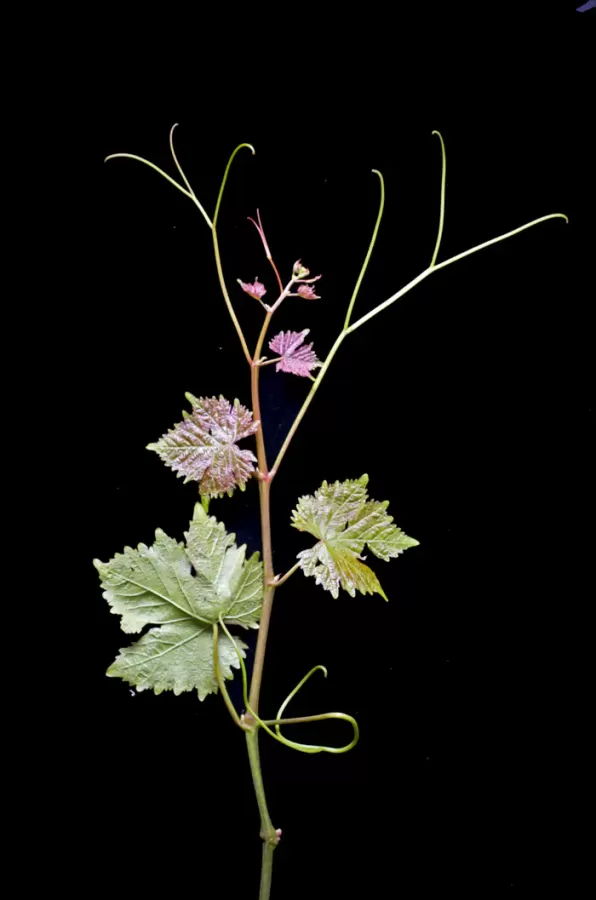
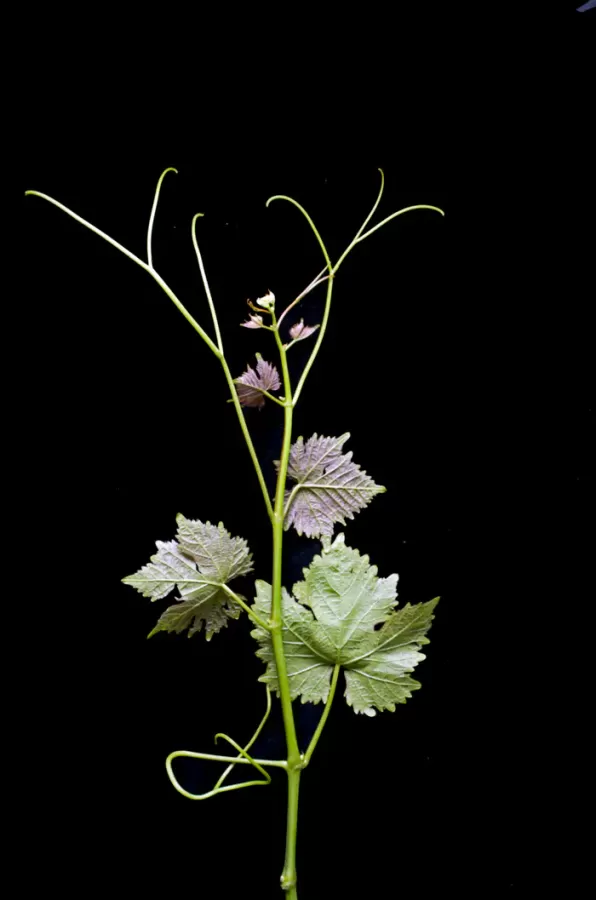
- Leaf: more undulate, with margins strongly curled downward.
- Flower: hermaphroditic.
- Cluster: most commonly cylindrical in shape, dense or very dense in structure.
- Berry: features a delicate yet pronounced muscat flavor and aroma.
Agrotechnical Features and Distribution
Pure-varietal commercial plantings formed by the Chasselas Musqué variety have practically not survived in the USSR it is found in vineyards predominantly as a varietal admixture to Chasselas Blanc and is zoned in the same regions. Until the 1960s, it was successfully cultivated on relatively large areas in farms of the Primorsky and Berdyansk districts of the Zaporozhye region.
The main agrobiological drawbacks of the grape variety Chasselas Musqué include significantly lower fruitfulness and yield indicators, as well as weaker resistance to fungal diseases and winter frosts compared to Chasselas Blanc. Yield reduction is particularly severe in years with dry summers or when vineyards are established on dry soils.
The Chasselas Musqué variety thrives best on the shelly-sandy soils of the Azov Sea coast. Despite their structureless nature, poor water-holding capacity, and low humus content (up to 1.5%), these sites do not experience an acute moisture deficit because fresh or slightly mineralized groundwater lies at a depth of slightly more than one meter.
* VINEYARD Note: According to the VIVC database and DNA analysis results, Chasselas Musqué is a mutation of the Chasselas Blanc variety.