Druzhba
| Variety Passport | |
| Country of origin: | Bulgaria, Russia |
| Breeder: | Potapenko Research Institute, Institute of Viticulture, Pleven |
| Variety number VIVC: | 15739 |
| Prime name: | Droujba |
| Pedigree given by breeder: | Misket Kailashki × (Zarya Severa × Muscat Hamburg) |
| Species: | Interspecific hybrid |
| Ripening period: | Early |
| Classification and Use: | Dual-purpose, Fresh consumption, Dry Table Wines, Sparkling Wines, Juice Production |
| Resistance group: | Moderately resistant |
| Data Sources: | Vitis International Variety Catalogue (VIVC), Институт по лозарство и винарство — Плевен, Научно-образовательное издание "Русский виноград" |
| Agrobiology | |
| Vigor: | Vigorous |
| Flower type: | Hermaphrodite |
| Downy mildew susceptibility: | 2 points (resistant) |
| Powdery mildew susceptibility: | 4 points (susceptible) |
| Botrytis susceptibility: | 3 points (tolerant) |
| Root phylloxera susceptibility: | 4 points (susceptible) |
| Winter hardiness: | Medium frost resistante (-21...-23°C) |
| Fertility coefficient: | 1,1 |
| Bud fertility index: | 1,5 |
| Percentage of fruitful shoots: | 70-85% |
| Pruning length: | Mixed / Guyot |
| Recommended rootstocks: | SO 4 |
| Clusters and berries | |
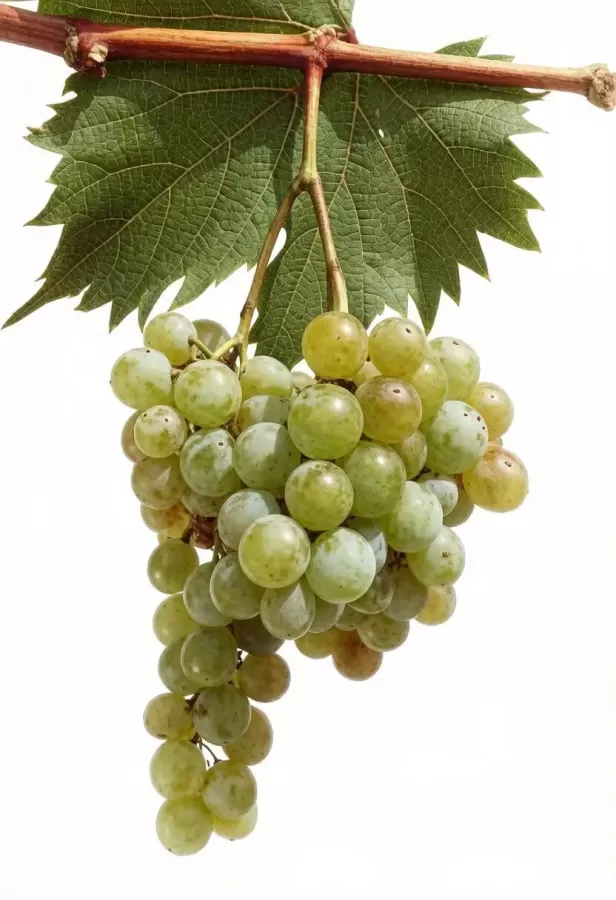
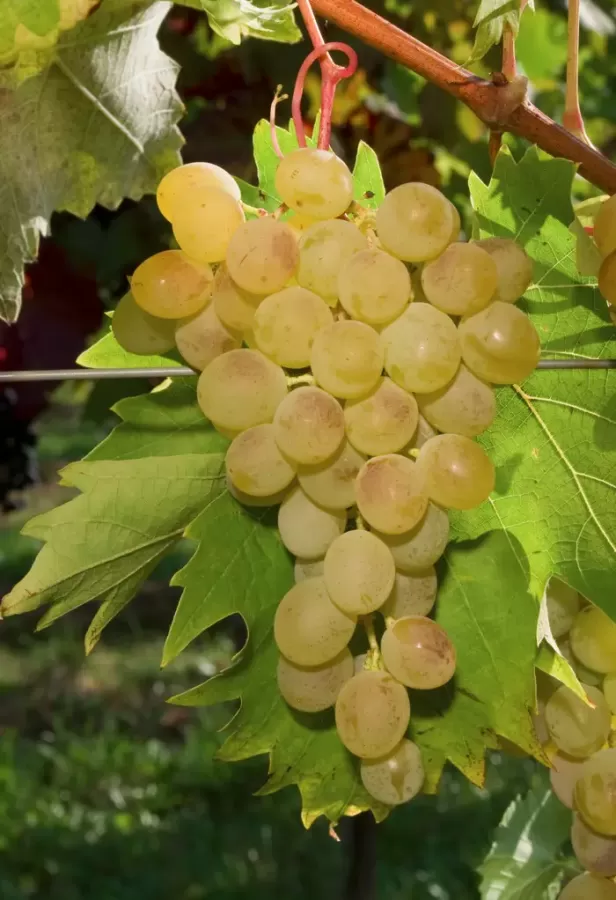
| Bunch shape: | Cylindro-conical, Winged |
| Bunch density: | Loose, Medium |
| Average bunch weight: | 280 g |
| Berry shape: | Rounded |
| Berry skin color: | White |
| Average berry weight: | 280 g |
| Seed development: | Seeded |
| Flesh texture: | Juicy |
| Berry skin thickness: | Thin |
| Berry skin texture: | Tough |
| Sugar content: | 19-21% |
| Total acidity: | 6,5-7,5 g/l |
| Berry Flesh Color: | Non-colored |
| Flavor type: | Muscat |
| Ampelographic overview |
Main Characteristics
Druzhba is an early-ripening dual-purpose grape cultivar developed through a joint breeding program between the Institute of Viticulture and Enology (Pleven, Bulgaria) and the Ya.I. Potapenko All-Russian Research Institute for Viticulture and Winemaking (Novocherkassk, Russia). The authors of the cultivar are I.A. Kostrikin, A.M. Aliev, and B.A. Muzychenko from Russia, and Yordan Ivanov and Vasil Valchev from Bulgaria. The Druzhba grape cultivar was obtained by crossing Misket Kailashki × (Zarya Severa × Muscat Hamburg). In Bulgaria, the cultivar is cultivated primarily in the Northern Viticultural and Winemaking Region, as well as in isolated plantings across other regions of the country.
Full ripening occurs early, around mid-August in Bulgaria. The average yield is 80 dt/ha (8 t/ha). Clusters are medium-sized (221–280 g) to fairly large (300–400 g). Under normal vine load, berry juice accumulates 19–21% sugars (194 g/dm³) with a titratable acidity of 6.5–7.5 g/dm³ (averaging 7.4 g/dm³). The flavor is harmonious with a pronounced, pleasant muscat aroma.
Morphological Description of the Druzhba Grape Cultivar
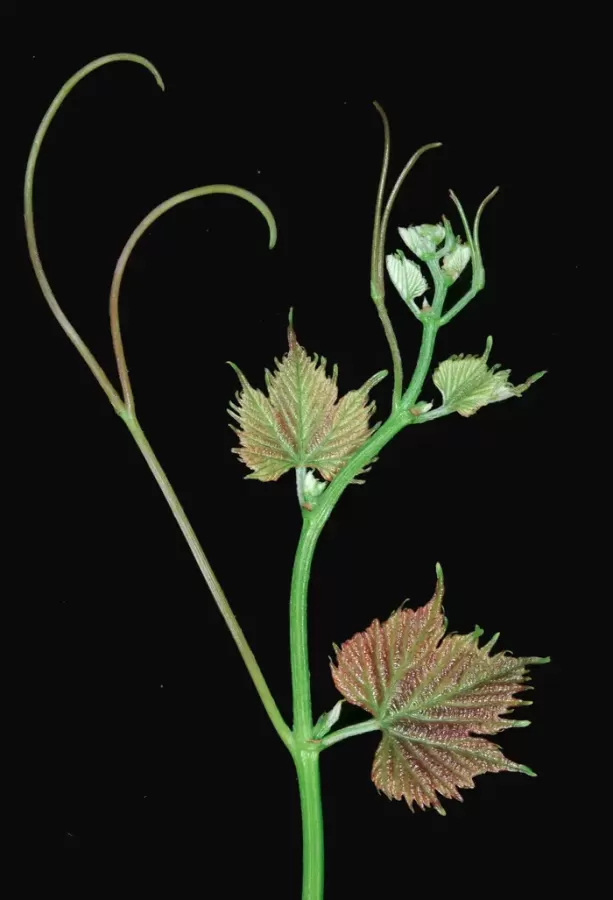
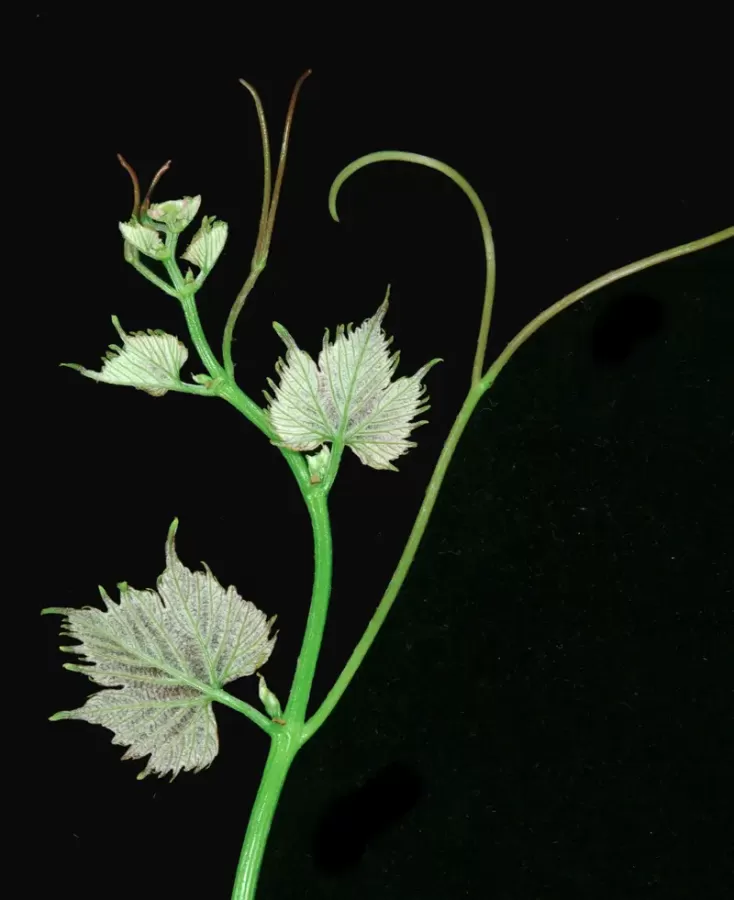
- Young Shoot (Shoot Tip): The tip of the young shoot is fully open, densely pubescent, with strong anthocyanin coloration. Young leaves are yellow-green, with medium-density arachnoid (cobwebby) pubescence on the lower surface. The young shoot is erect; the dorsal and ventral sides of the internodes are green with red stripes. There are more than three tendrils per shoot, medium in length.
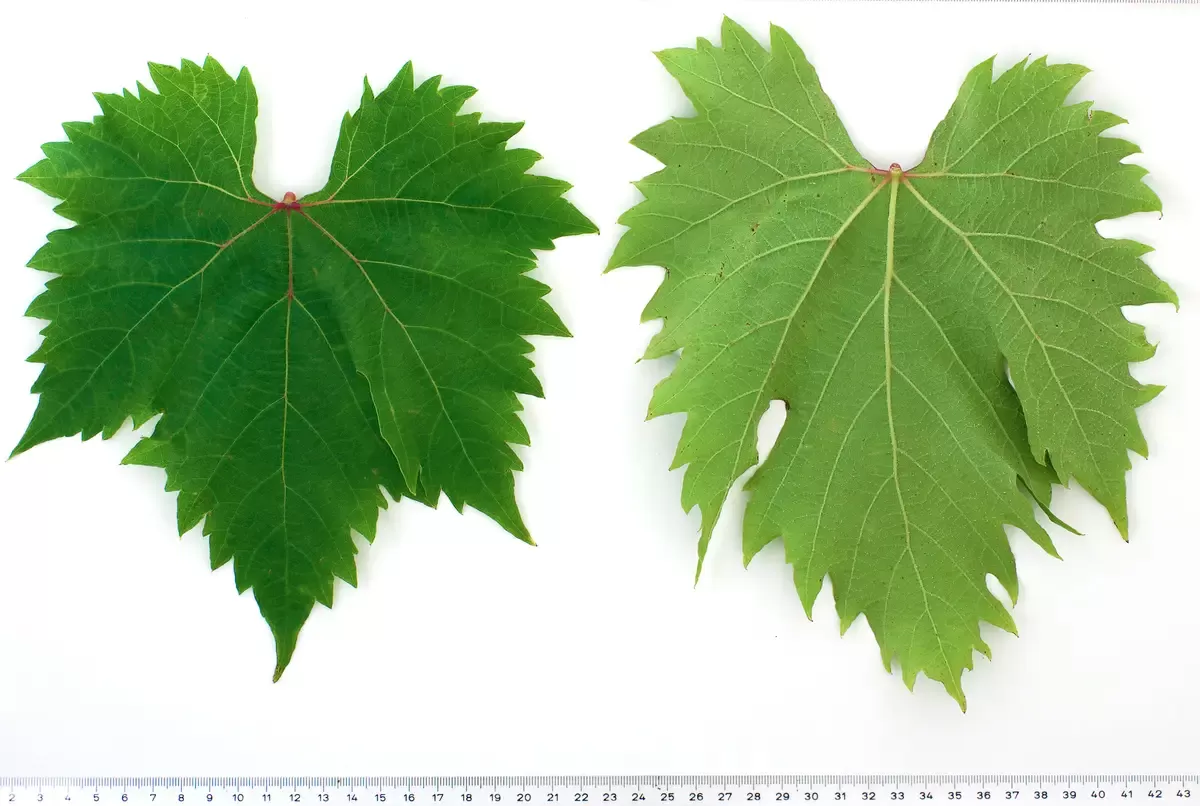
- Mature Leaf: Leaves are pentagonal, flat, medium-sized to large, light green, weakly lobed, three-lobed (occasionally five-lobed). The upper surface of the leaf blade is smooth, slightly blistered, or weakly reticulate-rugose; the lower surface has medium to weak arachnoid pubescence. The main veins are light green on both upper and lower surfaces. Upper lateral sinuses are shallow to medium in depth, closed or open. Lower lateral sinuses are shallow, barely defined, open as a V-shaped angle or slit-like. The petiolar sinus is generally half-open, vaulted or lyre-shaped with a flat (blunt) base. Teeth at the tips of the lobes are large, acute, with straight sides; marginal teeth are medium-sized, acute, with straight or slightly convex sides. The petiole is shorter than the midvein and wine-red in color.
- Flower: Hermaphroditic.
- Cluster: Medium to large (18.6 cm long, 10.8 cm wide; weight ranges from 221–280 g to 300–400 g), conical or cylindro-conical, occasionally winged, ranging from medium-dense to loose in structure.
- Berry: Medium-large to large (18.9 × 17.5 mm), round (nearly spherical), amber-white or yellow-green with an amber tint. The skin is thin yet tough, covered with a thick layer of waxy bloom (pruin). The pulp is juicy.
- Woody Shoot (Cane): Yellowish-brown, smooth.
Viticultural Features
The Druzhba grape cultivar is characterized by medium to high vine vigor and good cane maturation. The percentage of fruitful shoots is 70–85%. The fruiting coefficient is 1.1, and the fruitfulness coefficient is 1.5. The cultivar is not prone to flower coulure or millerandage (shot berries) and exhibits strong regenerative capacity.
The frost resistance of the Druzhba cultivar reaches -23 °C (enhanced tolerance to low winter temperatures). According to data from the Ya.I. Potapenko Institute, resistance is rated at 2.5 points for downy mildew (practically resistant), 3 points for powdery mildew, 3 points for grey mold (Botrytis), and 4 points for phylloxera. However, Bulgarian sources note that green shoots are susceptible to powdery mildew.
The cultivar is suitable for both low-trained cultivation using single or double Guyot systems and various high-trunk training systems. The recommended pruning load is approximately 28–30 winter buds per vine. The Druzhba cultivar shows optimal growth and fruiting performance when grafted onto Berlandieri × Riparia SO4 rootstock.
Winemaking and Product Characteristics
Based on the mechanical composition of its clusters, the Druzhba grape cultivar is classified as a dual-purpose cultivar. Fresh grapes are well-suited for table consumption and also serve as valuable raw material for winemaking, yielding high-quality dry white wines and sparkling wines with a distinct, harmonious muscat bouquet.