Tashly
| Variety Passport | |
| Country of origin: | Russia (Crimea) |
| Variety number VIVC: | 12270 |
| Prime name: | Tashli |
| Principal Synonyms: | Tyshly Izyum, Tashly Misket |
| Species: | Vitis vinifera |
| Ripening period: | Late |
| Classification and Use: | Dual-purpose, Fresh consumption, Dry Table Wines, Long-term storage, Juice Production |
| Resistance group: | Susceptible |
| Data Sources: | Vitis International Variety Catalogue (VIVC), Сорта винограда (Е. Н. Докучаева изд. 1986) |



| Agrobiology | |
| Vigor: | Semi-vigorous |
| Flower type: | Female |
| Downy mildew susceptibility: | 4 points (susceptible) |
| Powdery mildew susceptibility: | 4 points (susceptible) |
| Winter hardiness: | Non-hardy (-15...-17°C) |
| Fertility coefficient: | 0,6-1 |
| Bud fertility index: | 1,2-1,4 |
| Percentage of fruitful shoots: | 60-90% |
| Pruning length: | Long, 9-14+ buds |
| Clusters and berries | |
| Bunch shape: | Cylindro-conical, Winged |
| Average bunch weight: | 200-220 g |
| Berry shape: | Rounded, Oval |
| Berry skin color: | White |
| Seed development: | Seeded |
| Flesh texture: | Juicy, Fleshy |
| Berry skin thickness: | Thick |
| Berry skin texture: | Tough |
| Sugar content: | 16-18% |
| Total acidity: | 6,5-8 g/l |
| Flavor type: | Muscat |
| Ampelographic overview |
General Characteristics
Tashly (synonyms: Tyshly Izyum, Tashly Misket) is an indigenous Crimean table grape variety cultivated in the Alushta and Sudak districts of the Crimean region.
In terms of ripening time, the Tashly grape variety belongs to the late-ripening varieties. From bud burst to harvest maturity, 150–160 days pass with a sum of active temperatures of 2800–2900 °C. Harvest maturity in Crimea occurs in late September to early October. Vine vigor is above medium, and one-year-old canes mature well.
Yields are fairly high but inconsistent: at the Alushta State Variety Testing Plot in the Crimean region, the five-year average yield (1974–1978) reached 7.5–8.0 t/ha (75–80 c/ha). The average cluster weight is 200–220 g. Juice sugar content reaches 16–18 g/100 ml with a titratable acidity of 6.5–8 g/l. At full maturity, slight muscat notes appear in the berry flavor; the tasting score of fresh grapes is 8–8.5 points.
Ampelographic Description of the Tashly Grape Variety
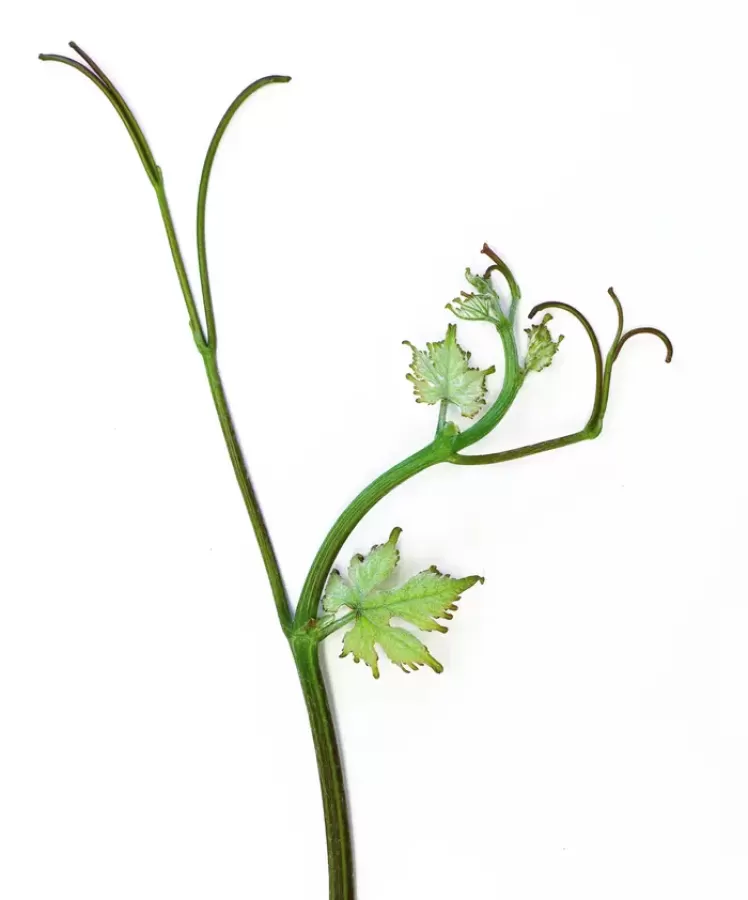
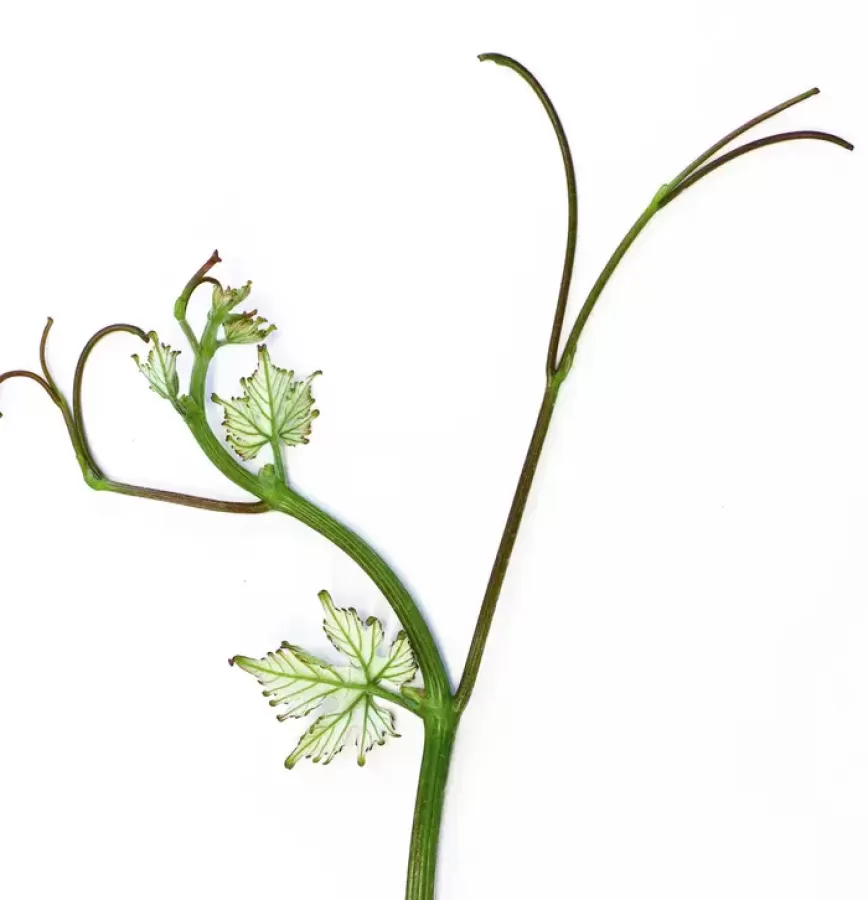
- Young shoot (shoot tip): The shoot tip is nearly white from dense pubescence, faintly tinted carmine along the margins. The upper surface of the first leaves is covered with felty pubescence that gradually diminishes, while the lower surface is densely pubescent.
- Mature one-year-old shoot: Grayish-brown, with darker nodes.
- Mature leaf: Medium-sized, round, five-lobed (occasionally three-lobed), very deeply lobed, undulating, with upturned margins and a bullate (blistered) surface. Upper lateral sinuses are deep, open, lyre-shaped, occasionally with a single-toothed base; the upper lobe features a narrow constriction. Smaller secondary sinuses are occasionally observed on the lateral lobes. Lower lateral sinuses are of medium depth and open. The petiolar sinus is closed, with a slit-like lumen. Apical teeth on the lobes are large, convex, with an acute tip; marginal teeth are dome-shaped. The lower leaf surface is covered with felty pubescence, and the veins with setose (bristly) pubescence. Autumn leaf coloration is yellow with brown spots.
- Flower: Functionally female.
- Cluster: Large or medium-sized (15–18 cm long, 10–15 cm wide), cylindrical-conical, lobed/winged, of varying density (due to the functionally female flower). The peduncle is short.
- Berry: Medium-sized to large, round or oval, greenish-yellow, covered with a light waxy bloom (pruine). The skin is thick and coarse; the pulp is fleshy-juicy with a slight muscat aftertaste. Each berry contains 2–4 large seeds.
Viticultural Features and Resistance
In the Tashly grape variety, the percentage of fruitful shoots is 60–90%, with 0.6–1 clusters per developed shoot and 1.2–1.4 clusters per fruitful shoot. The variety grows well on sheltered sites with gravelly soils and requires long cane pruning. Because Tashly has functionally female flowers, it must be planted in alternating rows with pollinator varieties (Kokur Belyi, Saperavi), alongside supplemental artificial pollination.
The Tashly variety is moderately susceptible to downy mildew and powdery mildew (oidium), and its winter hardiness is low. In years with unfavorable weather conditions, flower shatter (coulure) and shot berries (millerandage) are observed.
Technological Characteristics
Based on the mechanical composition of the cluster, the Tashly grape variety is classified as a table variety: juice and dense pulp fractions account for 91.2%, stems for 4.5%, skins for 2.3%, and seeds for 2%. Transportability is relatively high: berry detachment force is 264 g, and crushing resistance is 955 g. Owing to its tough skin, the berries withstand transportation and cold storage well: over the 1976–1978 average from October 15 to February 1, storage losses averaged 6.1%. In addition to fresh consumption, the grapes can also be used for processing into juices and table wines.